
Boosting Immunity in Children and Adults
Boosting Immunity in Children and Adults
We Morsi herbalist are in the middle of winter and the flu epidemic this year has been a huge concern across the country. Concern builds in parents during this time of year because they know when their children are in school they are exposed to more types of bacteria and viruses. I would like to review what you can do to keep yourself, your children, and loved ones healthy and ways to prevent the flu.
Boosting Immunity in Children
2. Children should bathe and wear clean clothes daily. Our bodies and our clothes can carry bacteria.
3. Children should take healthy snacks to school that will boost the immune system, such as raw fruits and vegetables that have been washed well, a trail mix of raw nuts and raisins, raw almonds, or almond butter on celery sticks or whole grain crackers.
4. Encourage children to eat healthy meals at home and take healthy lunches with them to school. Lunches could include a thermos of vegetable soup and some whole grain crackers, or a sandwich made from whole grain bread with healthy mayonnaise, romaine lettuce, tomato slices, turkey, chicken, or tuna. Send along some carrot strips, raw broccoli, celery sticks, and raw cauliflower with the sandwich. Another great lunch would be a nice salad made with romaine lettuce, lots of veggies, and a chopped boiled egg (fertile, organic are best). Sprinkle some raw sunflower seeds on the salad.
5. A specific supplement that can help build your child’s immune system is Vitamin C. Vitamin C helps to boost the immune system. It helps to protect the body from colds, flu, and even stomach viruses. Vitamin C can help to prevent allergies. Children can begin chewing a chewable Vitamin C as young as two years of age.
Teenagers and adults should take a good vitamin C that contains 1,000 mg. of C as well as bioflavonoids. Bioflavonoids strengthen all of the tissues in the body and prevent acne, varicose veins, and hemorrhoids.
Smokers should take 2,000 I.U. per day because smoking drains the body of vitamin C and weakens the lungs and tissues.
6. Another great supplement that boosts immunity is Vitamin D-3. In the summer sun, children receive lots of sunlight that provides vitamin D-3. Experts recommend that children should receive 1,000 I.U.’s per day and adults should receive 5,000 I.U. per day.
7. For children two years of age and older,
I recommend a good multi-vitamin with immune enhancers For minerals, I recommend Calcium plus trace minerals with zinc at night. Cells need minerals in order to kick out toxins.
Zinc helps fight infection. Growing children need minerals in order to grow strong bones and teeth. These are very easily absorbed.
8. Babies should be nursing and moms should be taking these nutrients that will pass into the milk. Breast milk is fortified with immune boosters, especially if the mother is eating healthfully and taking good supplements.
9. Pro-biotics or friendly bacteria are most important to keep the immune system strong. They have powerful immune builders, prevents stomach aches, helps digestion, and improves bowel movement.
I recommend goat milk for children and babies very good to improves bowel movement, nutrient, immune boost, Calcium plus, Growing children, very easily absorbed all the vitamins for it.
10. Finally for kids and adults, I recommend organic whole foods that nourish the body and immune system on a very deep level. Sun Chlorella, Hawaiian Spirulina, Barley Grass, Alfalfa, and Beet nourish the entire body especially the liver and blood. They are super foods that provide energy and help the mind to think more clearly. Spirulina contains DHA, a special oil that nourishes the brain. Also Parsley, which supports the urinary tract system. Acerola, rose hips, and orange peel are an excellent absorbable form of vitamin C and bioflavonoids – powerful immune boosters! And finally, I recomend Dulse. Dulse is naturally high in minerals and iodine that supports the thyroid and thymus. These master glands work together in harmony to assist metabolism and immunity. These foods are loaded with vitamins, minerals, chlorophyll, and digestive enzymes.
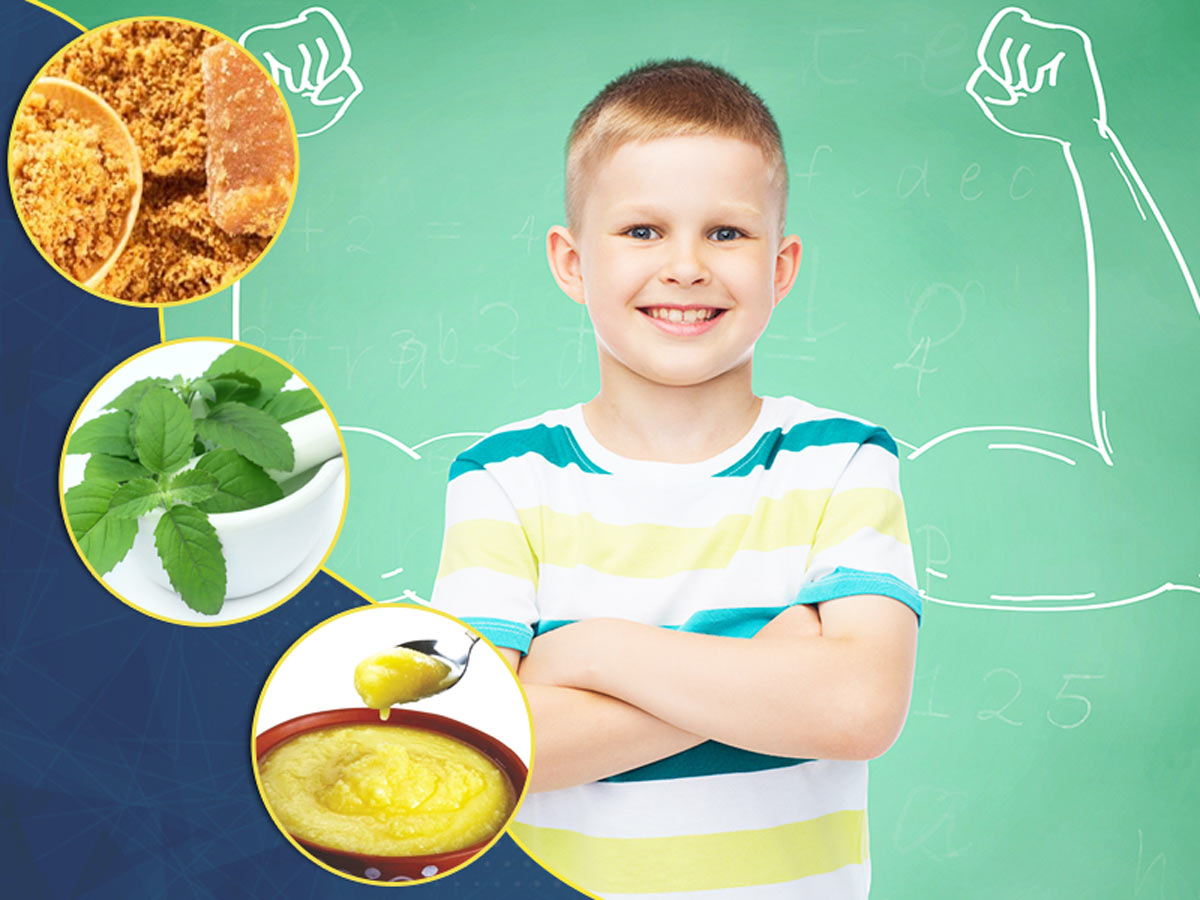
Remedies That Help During Times of Illness:
There are many remedies that have proven effective in helping children time and time again when they get sick with colds or flu.
- 1/2 dropper of Echinacea in water or juice, 3x during the day..
- Preolac, 1 capsule broken open, 3x per day in water, applesauce or juice.
- Peppermint oil, mix with olive oil or safflower oil and rub on chest and feet. This will open up lung passage ways and allow mucus to come out.
- A little peppermint and or eucalyptus oil can be used just under the nose to open up the breathing passages. Put in vaporizer to keep your child breathing well through the night. Add a few drops of silver to the vaporizer water as well.
- Elderberry liquid and elderberry cough syrup are excellent for healing pneumonia and lung congestion.
- Mullein Tea pulls mucus out of the lungs and strengthens them (can be added to some other type of drink or to soups and they?ll never know it?s there)
- Raw Apple Cider vinegar or fresh squeezed lemon in warm water with raw organic honey pulls mucus out and kills germs.
- Raw Apple Cider vinegar, 1 TBS in water can be gargled to get rid of sore throat.
- The best throat lozenges are zinc lozenges. Zinc really fights bacteria and is in the liquid multi vitamin and liquid coral calcium.
- There are also Black Cherry or Elderberry cough syrups available that are helpful.
- Make them poop! Mix 1 capsule of Preolac and 1 teaspoon of plain chlorophyll in warm water and place in a syringe. Insert rectally. This will pull out infection and mucus and help to break a fever.
- Pour a tablespoon of regular peroxide in a 6 oz. spray bottle and fill with purified water. Spray the atmosphere when anyone comes home who has been around illness.
- A mixture of Garlic and Mullein oil can also be used as eardrops and has been a great help for decades in fighting ear infections. One to two drops may be inserted in each ear.
- For sinus congestion, mix 1/2 dropper of colloidal silver with 2 oz. warm water and a pinch of sea salt and put in a dropper bottle. Makes great nose drops. A person will blow all kinds of mucus out of the nose right after using it.
Remember to have fun! Think STRONG, live STRONG and teach this to your children by word and example. Positive words spoken to children or to anyone helps to strengthen immunity. Praising, loving words are very powerful. (Studies have shown that people feel weak and are truly weakened when criticized.)
We wish for you and your families a very safe, happy, and healthy school year!
How the immune system works.
The immune system is made up of a network of cells, tissues, and organs that work together to protect the body. The cells involved are white blood cells, or leukocytes, which come in two basic types that combine to seek out and destroy disease-causing organisms or substances.
Leukocytes are produced or stored in many locations in the body, including the thymus, spleen, and bone marrow. For this reason, they’re called the lymphoid organs. There are also clumps of lymphoid tissue throughout the body, primarily as lymph nodes, that house the leukocytes.
The leukocytes circulate through the body between the organs and nodes via lymphatic vessels and blood vessels. In this way, the immune system works in a coordinated manner to monitor the body for germs or substances that might cause problems.
Here’s how it works:
When antigens (foreign substances that invade the body) are detected, several types of cells work together to recognize them and respond. These cells trigger the B lymphocytes to produce antibodies, specialized proteins that lock onto specific antigens.
Once produced, these antibodies continue to exist in a person’s body, so that if the same antigen is presented to the immune system again, the antibodies are already there to do their job. So if someone gets sick with a certain disease, like chickenpox, that person typically doesn’t get sick from it again.
This is also how immunizations prevent certain diseases. An immunization introduces the body to an antigen in a way that doesn’t make someone sick, but does allow the body to produce antibodies that will then protect the person from future attack by the germ or substance that produces that particular disease.
Although antibodies can recognize an antigen and lock onto it, they are not capable of destroying it without help. That’s the job of the T cells, which are part of the system that destroys antigens that have been tagged by antibodies or cells that have been infected or somehow changed. (Some T cells are actually called “killer cells.”) T cells also are involved in helping signal other cells (like phagocytes) to do their jobs.
Antibodies also can neutralize toxins (poisonous or damaging substances) produced by different organisms. Lastly, antibodies can activate a group of proteins called complement that are also part of the immune system. Complement assists in killing bacteria, viruses, or infected cells.
All of these specialized cells and parts of the immune system offer the body protection against disease. This protection is called immunity.